Consultation
Send your product size, quantity and deadline. Not sure which board or style fits? Tell us what goes inside and we will specify it for you, then quote within 24 hours.




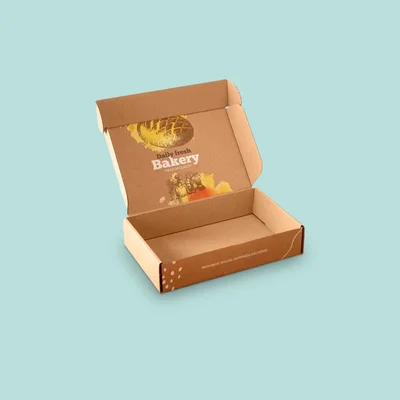

A shipping box is the only piece of packaging that travels alone with no outer carton protecting it. Everything a parcel meets between your warehouse and a front door lands directly on that one box. We print corrugated shipping boxes from 100 units upward and build each one around the weight it actually has to carry.
Most damage claims trace back to two decisions rather than to rough handling. The wall was too thin for the load or the box was too large so the product moved around inside. Both problems get solved before printing starts and the sections below explain exactly how.
Get Custom Quote
| Specification | Detail |
|---|---|
| Styles | Regular slotted 0201, full overlap 0203, half slotted 0200, die cut mailer, box with insert. |
| E flute | 1.5 mm wall. Prints close to paperboard and suits parcels under 2 pounds. |
| B flute | 3 mm wall. Resists crushing and remains the standard for ecommerce mailers. |
| C flute | 4 mm wall. Best stacking strength and handles loads up to about 30 pounds. |
| BC double wall | 7 mm wall. Heavy fragile freight and repeated pallet stacking. |
| Strength rating | 32 ECT covers most parcels to 20 pounds. 44 ECT above that or on pallets. |
| Sizes | Built to your inside dimensions, length by width by depth. |
| Clearance | About half an inch around a sturdy product. About one inch around fragile goods. |
| Dimensional weight | Length by width by height divided by your carrier divisor. UPS uses 139 or 166. |
| Sealing | Tape across the center seam. The die cut mailer needs none. |
| Liner | Kraft brown standard. White top for full color artwork. |
| Printing | Flexo for one or two colors. Litho lamination for photographic work. |
| Inserts | Corrugated cradles, partition grids and foam fitted to the product. |
| Recycling | Recycled content board. Goes curbside with no separation step. |
| Minimum order | 100 boxes per size and per design. |
| Production time | 8 to 12 business days after dieline approval. |
| Samples | A plain structural sample takes 3 to 5 business days and a printed sample takes 7 to 10. |
| Pricing | No setup or tooling charge. Break at 1,000 units. |
| Artwork and design | AI, EPS or PDF on our dieline. Keep small text above 7 point on flute. |
| Shipping | Free shipping worldwide on all orders. |
A parcel crossing a national network meets conveyors, sorters, chutes and the weight of everything loaded above it inside a trailer. Across a year of orders we trace far more damage to slow compression than to any single impact. Stacking pressure builds while a loaded trailer waits in a yard for hours at a time.
Corrugated exchanges water with the air around it and the fiber loses stiffness as moisture content climbs. We answer that exposure by specifying one grade above the calculated minimum whenever shipments cross a warm region during summer.
Board takes its stiffness from a fluted medium glued between two liners, and flute height governs how much of that stiffness reaches the finished panel. Buyers often read flute height as the thickness of the board, and the two figures separate because both liners add caliper of their own.
| Flute | Flute height | Flutes per foot | Where we run it |
|---|---|---|---|
| F flute | 1/32 inch, near 0.8 mm | 125 | Retail cartons and light mailers |
| E flute | 1/16 inch, near 1.6 mm | 90 | Small parcels printed in full color |
| B flute | 1/8 inch, near 3.2 mm | 47 | The standard ecommerce mailer wall |
| C flute | 5/32 inch, near 4.0 mm | 39 | Cartons needing stacking strength |
| BC double wall | Near 7 mm board | Two mediums | Heavy freight and pallet stacking |
The Mullen burst test measures the force needed to rupture the facing of the board and gets written as 200 pounds with a hash mark. Edge crush test measures edgewise compression in pounds per lineal inch, which sits far closer to what stacking does to a loaded carton.
Rule 41 of the Uniform Freight Classification and Item 222 of the National Motor Freight Classification list burst and ECT as alternative minimums for the same box. Neither document publishes a conversion, so a supplier who says that 200 pound burst equals 32 ECT is quoting trade habit rather than a standard.
| Mullen burst, single wall | ECT alternative |
|---|---|
| 125 pounds | 23 ECT |
| 150 pounds | 26 ECT |
| 175 pounds | 29 ECT |
| 200 pounds | 32 ECT |
| 250 pounds | 40 ECT |
| 275 pounds | 44 ECT |
| 350 pounds | 55 ECT |
We quote ECT on parcel work because edgewise compression describes what a stacked carton actually carries.
FEFCO and ESBO publish a numbered catalog of corrugated styles carrying drawings and numbers and no names. The familiar names come from the Fibre Box Association, so quote a number beside a name on every purchase order.
| Style and code | How it closes | Best suited to |
|---|---|---|
| Regular slotted carton, FEFCO 0201 | Inner and outer flaps meet at the center and get taped | General freight where unit cost leads |
| Full overlap slotted box, FEFCO 0203 | Outer flaps overlap fully and double the top and base | Dense products loading the base hard |
| Half slotted container, FEFCO 0200 | One end stays open and accepts a cover or tray | Line filling from above |
| Die cut mailer | Lid folds over and a tongue locks into a slot | Brands wanting a tape free opening |
| Shipping box with fitted insert | Outer carton holding a corrugated or foam cradle | Glass, ceramics and electronics |
Empty volume charges you twice, because void fill costs money and the carrier then bills dimensional weight for shipped air. Dimensional weight comes from length times width times height divided by a published divisor.
UPS applies 139 to domestic Daily Rates and 166 to domestic Retail Rates, so one carton bills at two weights depending on the rate sheet behind your account. Confirm the divisor inside your own contract, because negotiated accounts vary.
A box of 12 by 10 by 8 inches holds 960 cubic inches and bills near 7 pounds against a 139 divisor. Trimming it to 11 by 9 by 6 inches holds 594 cubic inches and bills near 5 pounds instead. We allow roughly half an inch of clearance around a rigid product and about one inch around anything fragile.
The round stamp on the bottom flap is a Box Maker Certificate. It states either the burst strength or the ECT value, the minimum combined weight of facings per thousand square feet, the size limit and the gross weight limit. Items 222-1 and 222-6 of the National Motor Freight Classification, current edition NMF 100-AY01, define what that stamp has to carry.
The certificate is not a legal requirement for general merchandise, because federal rules call for it only on hazardous shipments and government sales. UPS, FedEx, USPS and DHL each publish their own packaging guidelines without requiring the stamp. Read it as a declaration of board specification rather than a promise about survival on a particular route.
A specification describes the board while a test describes the finished pack. ISTA Procedure 3A, revision 18-18, covers packaged products for parcel delivery shipment at 70 kg or less across four package types. ISTA states that passing 3A does not by itself satisfy carrier packaging regulations and does not replace hazardous materials requirements.
ISTA 6-Amazon.com-SIOC applies to products shipping inside their own container through Amazon and sorts them into eight package types from A through H. ASTM D4169, revision 23e1, covers performance testing of shipping containers and systems.
Kraft board holds the unit price lowest and prints one or two colors cleanly, while white top board carries full color artwork that photographs well.
Printing directly onto corrugated can show washboarding, a faint ripple following the flutes under heavy solid coverage. Finer flutes such as E and F reduce that effect, and litho lamination removes it because the ink sits on a separate sheet. Compare every structure we cut on the box styles page when another shape suits the product better.
Send the product dimensions, the full shipped weight and the carrier you use most often. Tell us whether parcels travel loose through a parcel network or stacked on pallets, because those two routes call for different board.
Artwork should arrive as AI, EPS or PDF in CMYK at 300 dpi with 3 mm of bleed, and small text holds better above 7 point. Order a printed sample before you commit a full run to press, or build a free dieline at custom packaging dielines in any style and size. Email Sales@boxesexpert.com or call +1 682 243 7891 between 8am and 5pm EST, or browse the wider range of custom printed boxes first.
Creating custom boxes is now easy with us. See how our process works.
Send your product size, quantity and deadline. Not sure which board or style fits? Tell us what goes inside and we will specify it for you, then quote within 24 hours.
Upload your artwork and our team will refine it to perfection. No artwork? No problem. Just tell us about your product and we will turn your ideas into beautifully designed packaging.
Nothing reaches the press until you approve it. You get a digital proof as standard and a physical sample on request, so you can check everything yourself before the full run.
After production, every box goes through our strict quality control process to ensure it meets our standards. Once approved, your packaging is carefully prepared and delivered free to your own doorstep.
What buyers ask before ordering custom tray and sleeve boxes: how the fit is calculated, which tray to use, how variants change the cost and what the minimum applies to.
Apart from branding benefits, we deliver premium packaging solutions that combine durability, quality printing, and eco-friendly materials. Our team ensures every box meets your brand’s identity and market needs.

We use high-grade materials and advanced printing technology to ensure superior packaging quality.

Competitive rates designed to support businesses of all sizes.

We ensure timely production and delivery without compromising product quality.
Other structures buyers compare with a tray and sleeve set.


