
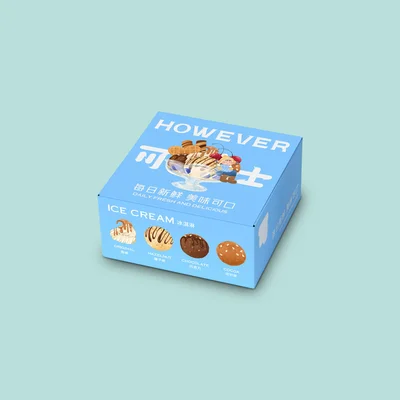
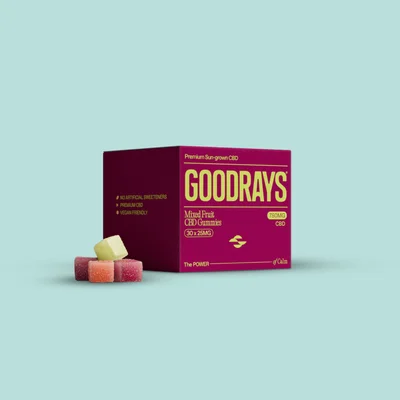
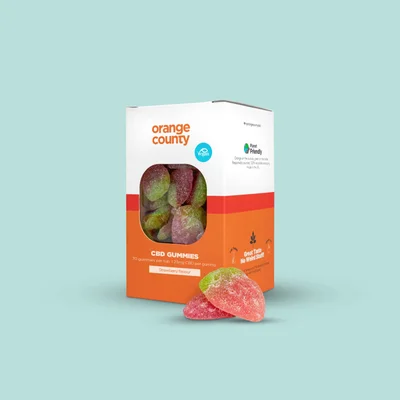
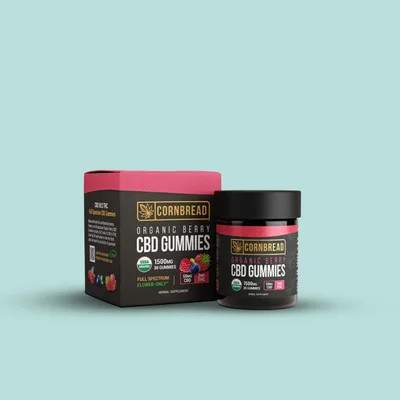
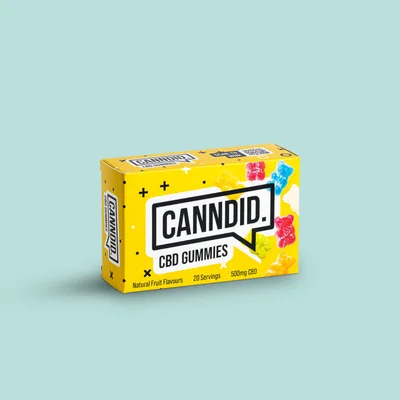






CBD edible packaging box sizes
| Count | Typical carton | Inner |
|---|---|---|
| 10 count | 75 by 45 by 20 mm | Small pouch |
| 20 count | 95 by 60 by 30 mm | Pouch or small bottle |
| 30 count | 110 by 70 by 35 mm | Pouch or bottle |
| 60 count | 125 by 80 by 45 mm | Bottle |
| Sample or single | 60 by 40 by 15 mm | Sachet |
Gummies settle and compress, so a carton sized to a loosely filled pouch looks underfilled by the time it reaches the shelf. Size the carton to the settled volume of the filled pouch instead. You get that figure by measuring a pouch that has been handled rather than one taken straight off the filling line.
The barrier is the inner, not the carton
Gummies are moisture sensitive in both directions because they harden when moisture escapes and turn sticky when it gets in. Heat makes both worse because a hot delivery van softens gelatin and pectin enough for the pieces to bond together.
A paperboard carton gives you no moisture barrier at all on its own. Moisture control comes from a foil or metallized pouch or from a sealed bottle with an induction seal. The carton handles branding and structure and the warning panel while the inner does the preservation.
Specify both together because a good looking carton around an inadequate pouch still fails on shelf. A desiccant sachet inside the pouch extends stability further where the shelf life is long.
Child resistant gummy boxes
The certification has to sit somewhere in the package wherever a state requires child resistance for cannabinoid edibles. You can put that certification in one of three places.
- CR pouch zipper: a press and slide zipper on the inner pouch, which keeps the outer carton simple
- CR bottle cap: a push and turn cap on a bottle inside a printed carton, familiar to consumers and reliable
- CR carton: a push and slide tray or a locking tuck that works at carton level, which keeps the package to a single fiber material
Most states that require child resistance on multi serving products also require it to survive repeated openings. That rules out a single use tear seal as the only child resistant feature. Ask for the certification test report rather than a description of it. The certified closure is built into your custom made boxes from the dieline stage.
Packaging that appeals to children
This is the restriction most likely to force a redesign and it applies specifically to edibles. Many states prohibit cannabinoid edible packaging that imitates a commercial candy brand. The same rules usually cover cartoon characters and animals and fruit imagery used in a way that appeals to children. Bright color schemes associated with children’s confectionery get named too, and a few states go further and prohibit particular product shapes outright.
Gummies are a confectionery format by nature so this catches brands often. A design that passes without comment on an ordinary candy pack can be non compliant on a cannabinoid one. Get the restriction wording for your own states before creative work starts rather than after. Reviewing a finished design against the rules costs far more than designing inside them from the start.
Labeling
Requirements vary by state and this core set shows up almost everywhere.
- Cannabinoid content per gummy and per package
- Total count, serving size and net weight
- A full ingredient list and an allergen declaration
- A batch identifier and a QR code linking to the certificate of analysis
- Specific warning text and a symbol at a minimum size in many states
Edibles carry the heaviest labeling burden in this category because food rules apply on top of cannabinoid ones. The allergen declaration is a food requirement and it does not go away. Lay the mandatory elements onto the dieline first and design the brand artwork into what is left. Reserve at least 40 by 60 mm for them and expect to need more than that.
Materials and sustainability
The carton recycles cleanly when you use uncoated or matte varnished board with a water based print. The foil pouch inside it does not recycle in the same stream.
Keep the barrier in a separable inner and print an instruction to remove it before the carton goes in the bin. Printing that instruction on the carton is both accurate and useful to the customer. It’s also more defensible than a general eco claim, which now carries regulatory risk in several markets. All of our food contact board is supplied PFAS free.
Custom printed CBD gummy boxes and ordering
Offset CMYK handles a full color carton once the volume justifies plates. Digital suits multiple flavors and strengths because there is no plate cost per variant. That is the normal ordering pattern on a gummy line with several SKUs.
Strength differentiation matters for safety as much as for merchandising. A customer should be able to tell a 10 mg product from a 25 mg one without reading small type. That usually means a color system rather than a changed number.
Supply vector PDF, AI or EPS in CMYK at 300 dpi with 3 mm bleed. Mark the mandatory warning area on the artwork so nothing overlaps it at proofing. You get a free dieline and a digital proof before production.
- Minimum order: 100 boxes per size and per design
- Production: 8 to 12 business days after dieline approval, 10 to 15 for rigid
- Samples: plain structural sample takes 3 to 5 working days and a printed sample takes 7 to 10.
- Setup and tooling: no charge on the first order or any reorder
- Price break: 1,000 units on the same artwork
- Design support: free at every stage
- Artwork: vector PDF, AI or EPS on our dieline, CMYK, 300 dpi, 3 mm bleed
- Shipping: free shipping worldwide on all orders