Consultation
Send your product size, quantity and deadline. Not sure which board or style fits? Tell us what goes inside and we will specify it for you, then quote within 24 hours.

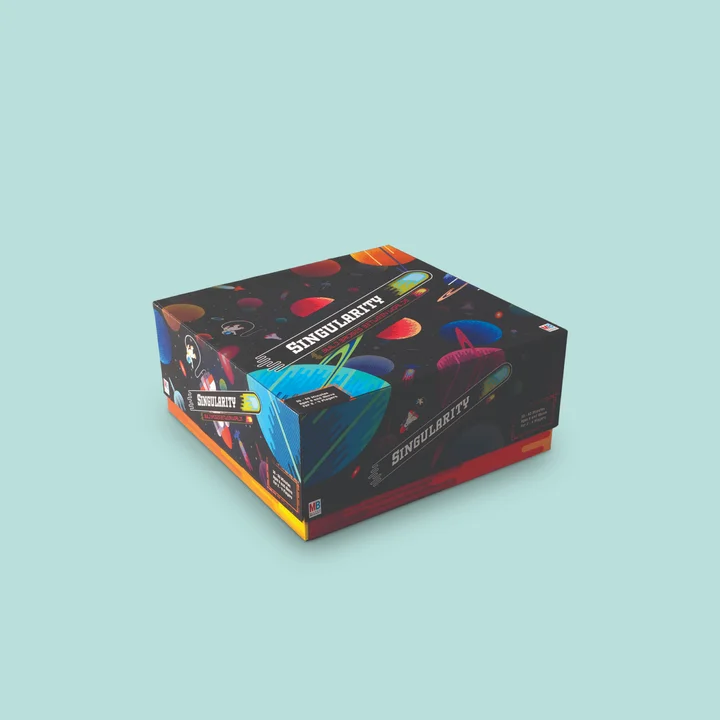
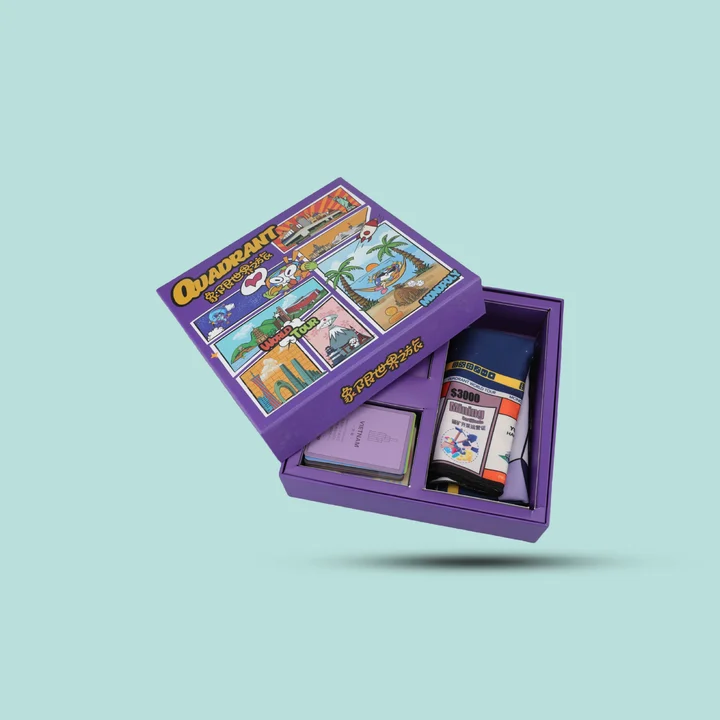
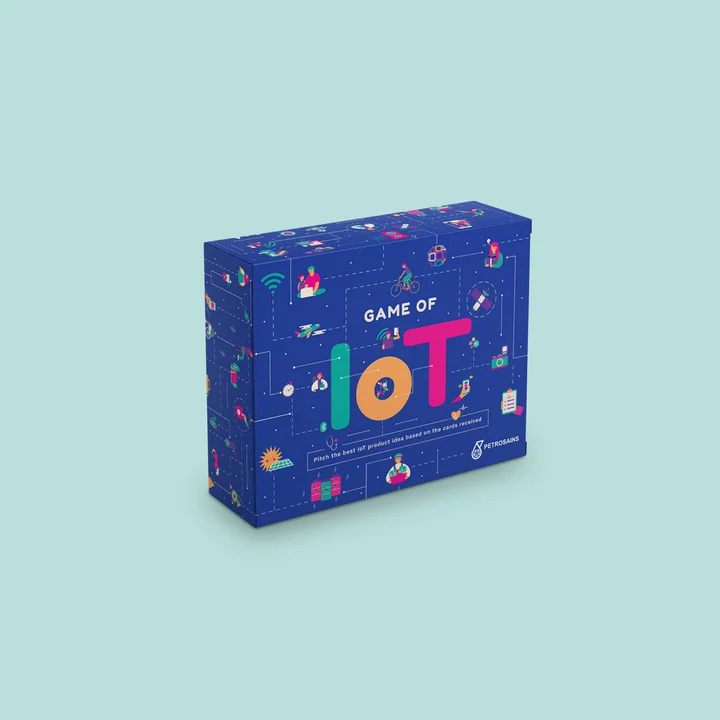
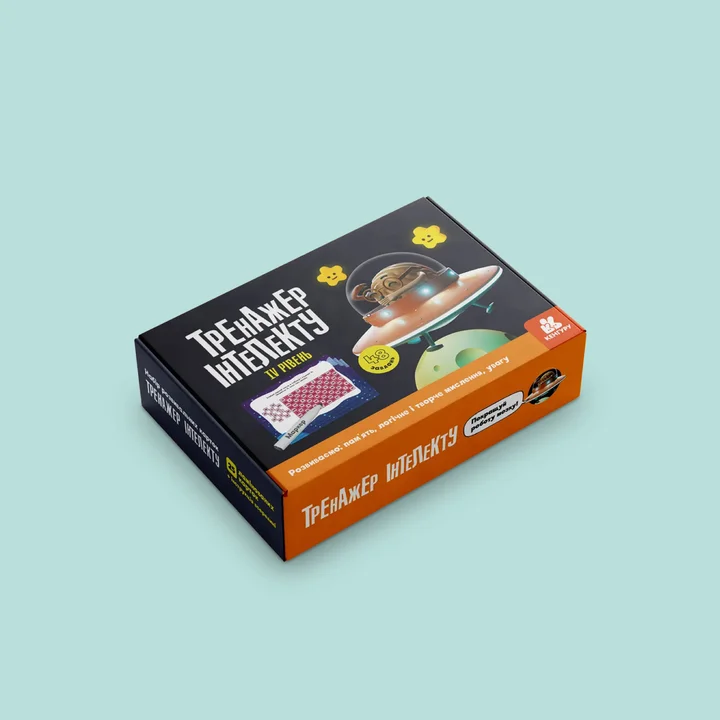
An intent warning before anything else. This cluster mixes two audiences. Playing card case, poker card case and best mtg deck boxes are consumers buying a plastic accessory rather than print buyers. This page targets the manufacturing intent instead, which means custom board game boxes at 210 and KD 1, game board boxes at 210 and KD 2, custom board game box at 110 and KD 1, custom playing card box at 110 and KD 3, blank board game boxes at 90 and KD 0, and custom board game box printing at 20 and KD 0. Almost all of it sits between KD 0 and KD 3.
Get Custom Quote




| Type | Specifications |
|---|---|
| Dimensions | All Custom Sizes & Shapes |
| Quantities | Minimum 50 Boxes |
| Paper Stock | 10pt to 28pt (60lb to 400lb) Eco-Friendly Kraft, E-flute Corrugated, Bux Board, Cardstock |
| Printing | No Printing, CMYK, CMYK + 1 PMS Color, CMYK + 2 PMS Colors |
| Finishing | Gloss Lamination, Matte Lamination, Gloss AQ, Gloss UV, Matte UV, Spot UV, Embossing, Foiling |
| Included Options | Die Cutting, Gluing, Scored, Perforation |
| Additional Options | Eco-Friendly, Recycled Boxes, Biodegradable |
| Proof | Flat View, 3D Mock-up, Physical Sampling (On Request) |
| Shipping | 3–4 Business Days (Rush Orders Available on Demand) |
Tabletop products need more than one component. A custom deck box, an expansion case and custom card game boxes often ship as a set, and each needs its own dieline.
Custom Board Game Boxes and Deck Boxes
Custom game boxes are litho wrapped rigid boxes and printed tuck cartons made for tabletop products such as board games, card games, TCG decks and expansions. Boxes Expert makes two piece telescoping boxes, card tuck boxes and fitted inserts, from 50 units for prototypes and crowdfunding fulfilment through to full production runs.
Specifications
|
Spec |
Standard offer |
|
Formats |
Two piece telescoping game box, tuck end card carton, deck box, expansion box, shipping carton |
|
Board |
1.5 to 3 mm greyboard litho wrapped, or 300 to 400 gsm SBS for tuck boxes |
|
Inserts |
Die cut paperboard, moulded pulp, vacuum formed PET |
|
Finishes |
Matte or gloss lamination, soft touch, spot UV, foil, emboss, linen texture |
|
Printing |
Litho CMYK plus spot colours, digital for prototypes and short runs |
|
Minimum order |
50 prototype, 250 production rigid, 100 tuck boxes |
|
Turnaround |
15 to 25 working days depending on insert complexity |
How a board game box is built
A board game box is not a folding carton. It is a two piece telescoping rigid box. The base and the lid are each formed from greyboard and wrapped in a litho printed sheet.
That construction is what gives it the weight, the square corners and the slow release of air when the lid comes off. Those are the physical signals buyers read as a properly published game.
Greyboard thickness decides how the box feels and how much weight it survives.
|
Thickness |
Use |
|
1.5 mm |
Small card games, expansions, promo boxes |
|
2.0 mm |
The standard for mid weight games |
|
2.5 to 3.0 mm |
Heavy component games, deluxe and collector editions |
Retail shelving is standardised, so most published games use one of a handful of footprints.
|
Format |
Approx size |
Typical use |
|
Small square |
4.5 by 4.5 by 1.5 |
Card games and fillers |
|
Standard square |
11.5 by 11.5 by 2.75 |
The most common shelf format |
|
Large square |
12 by 12 by 3 |
Component heavy games |
|
Rectangular |
11.75 by 8.75 by 2.5 |
Traditional family game format |
|
Deep box |
12 by 12 by 4 and up |
Deluxe and miniatures heavy games |
If you plan to sell through retail distribution, use a standard footprint. A bespoke size means the game does not shelf cleanly next to its competitors and distributors do notice. We still build custom boxes large enough for deluxe editions while holding the standard shelf width.
Blank game boxes are also worth knowing about. Unprinted white or kraft telescoping boxes let you prototype, playtest and run print on demand, and they are the cheapest way to validate a footprint before committing to litho tooling.
Custom card boxes and deck boxes
Tuck boxes hold a deck and are the lowest cost custom item in the category. Sizing follows the cards.
|
Card format |
Card size |
Tuck box internal |
|
Poker |
2.5 by 3.5 |
2.6 by 3.6 by 0.85 for 52 cards |
|
Bridge |
2.25 by 3.5 |
2.35 by 3.6 by 0.85 |
|
Tarot |
2.75 by 4.75 |
2.85 by 4.85 by 0.9 |
|
Mini |
1.75 by 2.5 |
1.85 by 2.6 by 0.7 |
Depth comes from card count and stock thickness. A 52 card poker deck on 310 gsm blue core stock runs about 0.75 to 0.85 inches. A 100 card TCG deck needs closer to 1.5 inches. Always confirm depth against your actual printed stock rather than the card count, because caliper varies noticeably between card suppliers.
Deck boxes for TCG and commander play are larger and hold 60 to 100 sleeved cards. They are often sold as a branded product in their own right. Sleeves add roughly 0.3 mm per card, which is enough to make an unsleeved spec box unusable.
On finishing, foil stamping, embossing and spot UV over a matte laminated tuck box is the standard premium combination in playing cards. This is a category where the packaging is genuinely part of what gets collected.
Custom board game box inserts
For tabletop products the insert is not protection. It is user experience. Setup and pack down time shows up in reviews, and a game that takes four minutes to sort back into the box gets played less often.
Die cut paperboard inserts. Lowest cost, fully recyclable and fine for card and token games. Wells can be shaped around sleeved deck sizes.
Moulded pulp inserts. Recyclable, deeper wells and better grip on irregular components. Publishers are increasingly choosing these over PET as they move away from plastic.
Vacuum formed PET trays. The most precise fit and the best answer for miniatures, but the least defensible on sustainability. Tooling cost is real, so it suits committed production runs rather than a first printing.
Two rules prevent most insert failures. Design the wells for sleeved cards if the game is at all collectible. Design the tray so components stay put when the box is stored vertically, because most people shelve games on their side.
Prototypes, crowdfunding and short runs
Tabletop publishing runs on small first printings. A crowdfunded game might need 50 prototype copies for reviewers, then 800 for backers, then a retail run.
Digital printing at 50 units covers prototype and review copies with no plate cost. Litho production becomes economical above roughly 500 copies once plate and wrapping setup amortise.
Specify the shipping carton at the same time as the game box rather than afterwards. A game box is not a shipping box. Sent on its own the corners crush and the retail facing print arrives damaged.
Custom game box printing and artwork
Supply vector PDF or AI in CMYK at 300 dpi with 3 mm bleed and all fonts outlined.
Rigid box artwork wraps around the board, so the dieline includes wrap allowance on every edge. Always work from the supplied dieline rather than a flat rectangle. You get a free dieline and a digital proof, and a physical white sample box is available before full production.
Creating custom boxes is now easy with us. See how our process works.
Send your product size, quantity and deadline. Not sure which board or style fits? Tell us what goes inside and we will specify it for you, then quote within 24 hours.
Upload your artwork and our team will refine it to perfection. No artwork? No problem. Just tell us about your product and we will turn your ideas into beautifully designed packaging.
Nothing reaches the press until you approve it. You get a digital proof as standard and a physical sample on request, so you can check everything yourself before the full run.
After production, every box goes through our strict quality control process to ensure it meets our standards. Once approved, your packaging is carefully prepared and delivered free to your own doorstep.
Explore our frequently asked questions to better understand our custom packaging services, production process, and delivery timelines.
Apart from branding benefits, we deliver premium packaging solutions that combine durability, quality printing, and eco-friendly materials. Our team ensures every box meets your brand’s identity and market needs.

We use high-grade materials and advanced printing technology to ensure superior packaging quality.

Competitive rates designed to support businesses of all sizes.

We ensure timely production and delivery without compromising product quality.
Explore more packaging solutions from Boxes Expert. Discover a range of custom packaging options designed to complement your products, strengthen your brand presentation, and deliver a better customer experience.