Consultation
Send your product size, quantity and deadline. Not sure which board or style fits? Tell us what goes inside and we will specify it for you, then quote within 24 hours.

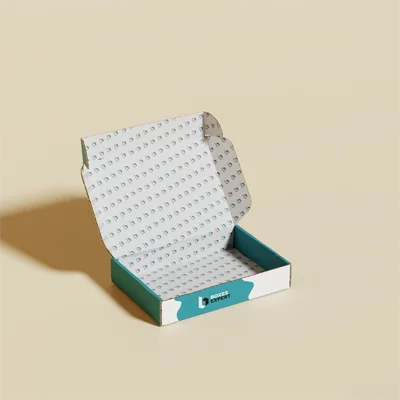
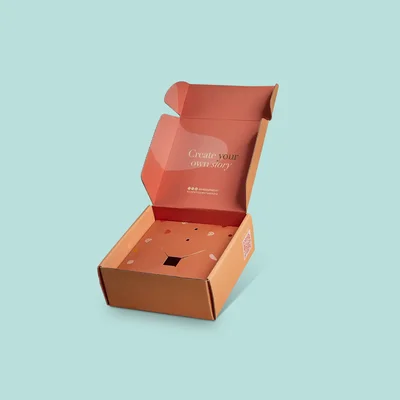
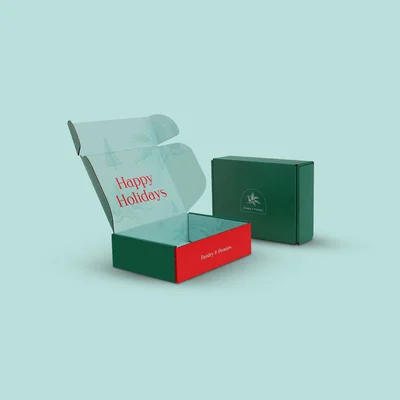
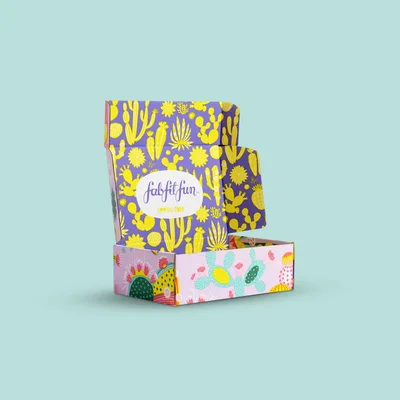
A mailer box ships without tape. One die cut blank folds into a base and a lid, and the side wings lock the walls in place. A packer closes it in a single motion and a customer opens it without reaching for a knife. That is the reason this format became the default for ecommerce packaging.
Boxes Expert prints mailer boxes on F, E and B flute corrugated from 100 units. This page covers what applies to every mailer style. Pick the individual style from the routing table further down.
Get Custom Quote
| Type | Specifications |
|---|---|
| Dimensions | All Custom Sizes & Shapes |
| Quantities | Minimum 100 Boxes |
| Paper Stock | 10pt to 28pt (60lb to 400lb) Eco-Friendly Kraft, E-flute Corrugated, Bux Board, Cardstock |
| Printing | No Printing, CMYK, CMYK + 1 PMS Color, CMYK + 2 PMS Colors |
| Finishing | Gloss Lamination, Matte Lamination, Gloss AQ, Gloss UV, Matte UV, Spot UV, Embossing, Foiling |
| Included Options | Die Cutting, Gluing, Scored, Perforation |
| Additional Options | Eco-Friendly, Recycled Boxes, Biodegradable |
| Proof | Flat View, 3D Mock-up, Physical Sampling (On Request) |
| Shipping | 8–12 Business Days (Rush Orders Available on Demand) |
A mailer is a roll end construction. The blank rolls around the product so the side walls end up double thickness. That doubled wall is where the strength comes from rather than from the board weight alone. Two locking wings hold the lid shut and a front tuck flap takes the closing pressure.
Nothing is glued and nothing is taped. That matters on two ends of the journey. Your packing line saves the tape step on every unit, and your customer opens the box cleanly, which is the moment most likely to be filmed and posted.
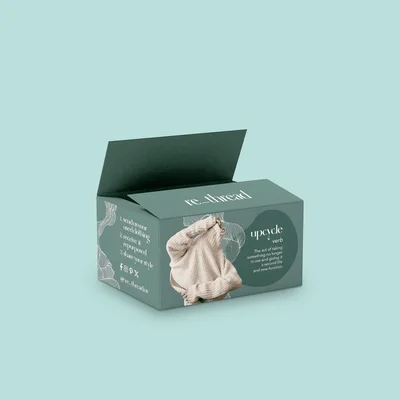
The same construction is what lets the inside of the lid carry print. A taped shipper hides its interior behind a strip of plastic. A mailer shows the interior panel the second it opens.
Every style below shares the specifications in the table above. What changes is the closure and the depth, and that is what decides which one suits your product.
| Style | Best for | Worth knowing |
|---|---|---|
| Roll end tuck top | Apparel, subscription boxes, general ecommerce | The standard mailer. Lowest cost and the fastest to assemble |
| Roll end front tuck | Retail ready products sold from a shelf as well as shipped | Front closure gives a cleaner display face |
| Roll over hinged lid | Gifting, premium electronics, welcome kits | The lid stays attached and opens like a case |
| Literature mailer | Books, print media, flat product | Shallow depth keeps the contents from sliding |
| Book wrap | Single books, frames, flat packed items | Wraps to the product height so void fill is rarely needed |
| Rigid mailer | Jewelry, cosmetics, high value gifting | Greyboard wrapped in printed paper. Heavier and slower to produce |
Flute is the wave of paper between the two liners. It decides how much crush the box survives and how well the surface prints.
| Flute | Caliper | Suits | Print surface |
|---|---|---|---|
| F flute | 0.8 mm | Light retail goods under 1 kg | Smoothest of the corrugated options |
| E flute | 1.5 mm | The common choice from 1 to 5 kg | Prints cleanly with minimal washboarding |
| B flute | 3 mm | 5 to 12 kg and anything with hard edges | Visible flute lines on heavy ink coverage |
| EB double wall | 4.5 mm | Above 12 kg or long transit routes | Use litho lamination for a clean face |
Ask for the edge crush figure rather than the paper weight when you compare quotes. Edge crush is what predicts stacking performance in a trailer, and two boards of the same weight can test very differently.
Measure the product at its widest point and add 3 mm of clearance on each axis. A tighter fit binds during assembly and a looser one lets the contents move.
Carriers bill on dimensional weight, so an oversized box costs money on every single shipment. Multiply length by width by height in inches and divide by 139 to get the billable weight for US domestic parcels. Cutting one inch of height off a high volume mailer often pays for the tooling in a month.
Right sizing also removes void fill. A box that matches the product needs less paper inside it, which lowers your material cost and your package weight at the same time.
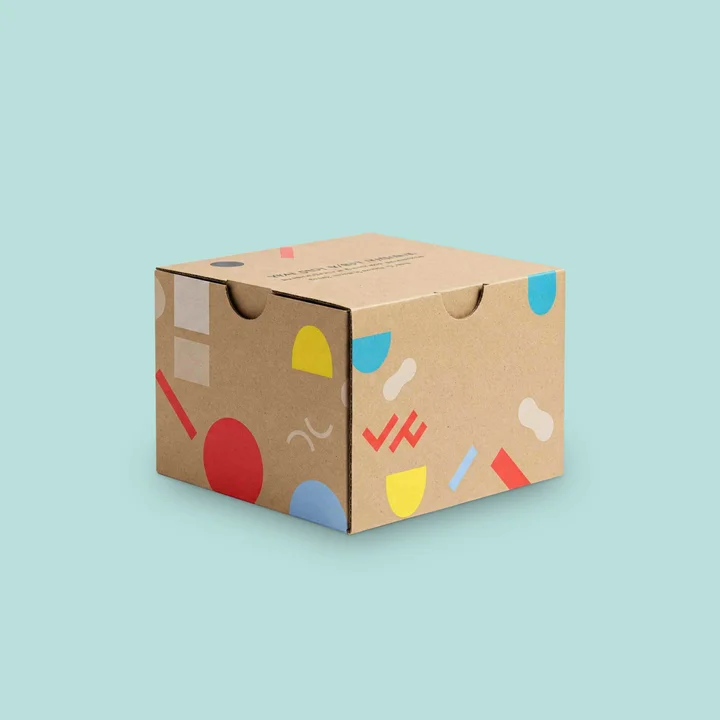
Flexo prints one to four colors directly onto the liner and it is the volume route. Litho lamination bonds a printed sheet to the corrugated and gives photographic quality on a full color design. Digital carries no plate cost, so seasonal artwork and multiple variants stay affordable at 100 units.
Kraft liner shifts every color warmer and darker, exactly as it does on any other kraft stock. White top liner costs a little more and holds your brand colors where you set them. Order a printed sample before committing if your palette is light.
The interior panel is the part most brands leave blank. A message, a pattern or a discount code printed inside the lid reaches the customer the second the box opens. It also costs far less than a second color on the outside. We build the same option into custom printed boxes across every other structure we run.
A mailer is handled between seven and twelve times on a typical domestic route. Damage almost always shows up at the corners and along the front tuck flap.
Three things prevent most of it. Match the flute to the filled weight rather than to the empty product. Keep the contents from shifting, because a loose item turns into a hammer inside the box. Specify a deeper front flap on any mailer over 12 inches long, since a short flap pops open under compression.
Tell us the shipping lane and the filled weight when you ask for a quote. Both change the board we recommend.
An uncoated mailer printed with water based ink is a single material box. It carries no tape, no plastic film and nothing a customer has to separate, so it recycles in standard fiber streams exactly as a plain shipper does.
Lamination is the one thing that breaks that, because it puts a plastic layer over the fiber. Choose uncoated or matte varnished board with a one or two color print if recyclability is part of your brand promise. Print the disposal instruction on the box rather than a general eco claim, since vague claims now carry regulatory risk in several markets.
Supply vector PDF, AI or EPS artwork in CMYK at 300 dpi with 3 mm bleed, built on our dieline rather than a flat rectangle. The dieline and the digital proof are free, and so is setup and tooling on your first order and on every reorder after it.
Minimum order is 100 boxes per size and per design, with a price break at 1,000 units on the same artwork. Production runs 8 to 12 business days from dieline approval and shipping is free worldwide.
Email Sales@boxesexpert.com with your product dimensions, your filled weight and your monthly volume. We are on Copper Dr, Newport, DE 19804, USA and we answer from 8am to 5pm EST on weekdays.
Creating custom boxes is now easy with us. See how our process works.
Send your product size, quantity and deadline. Not sure which board or style fits? Tell us what goes inside and we will specify it for you, then quote within 24 hours.
Upload your artwork and our team will refine it to perfection. No artwork? No problem. Just tell us about your product and we will turn your ideas into beautifully designed packaging.
Nothing reaches the press until you approve it. You get a digital proof as standard and a physical sample on request, so you can check everything yourself before the full run.
After production, every box goes through our strict quality control process to ensure it meets our standards. Once approved, your packaging is carefully prepared and delivered free to your own doorstep.
Practical questions about ordering, shipping and reusing mailer boxes. For anything not covered here, email Sales@boxesexpert.com or call +1 682 243 7891 between 8am and 5pm EST.
Apart from branding benefits, we deliver premium packaging solutions that combine durability, quality printing, and eco-friendly materials. Our team ensures every box meets your brand’s identity and market needs.

We use high-grade materials and advanced printing technology to ensure superior packaging quality.

Our boxes are manufactured using sustainable materials that reduce environmental impact.

Fully customizable shapes, sizes, and printing options to match your branding requirements.

We ensure timely production and delivery without compromising product quality.

Competitive rates designed to support businesses of all sizes.

Dedicated support team to assist you throughout your packaging journey.
Explore more packaging solutions from Boxes Expert. Discover a range of custom packaging options designed to complement your products, strengthen your brand presentation, and deliver a better customer experience.